
Bathrooms can be a complicated place when someone happens to have a difficult time getting in/out of a shower or bathtub. Bathrooms are a common place for falls, and often, people stop doing bathing tasks in their tub or shower because it’s not safe for them.

While that topic is important to explore further, in this article, I specifically want to discuss the design of the shower and how manufacturers and designers often miss the mark when adding that seat—which, in turn, makes it difficult to add other specialty seats to that same space. You may be thinking, “But Sarah, people need seats!” Yes, they do, but let me explain why I don’t prefer these built-in options.

The Mindset

Many people get excited when they see a built-in seat in a shower. For reference, I’m talking about all-in-one units where the seat is built-in. The picture below is just a screenshot from my quick Google search – “shower with built-in seat.” I have nothing against these companies – I’m talking about the function of the design.

Screenshot of a google search of showers with built in seats from a variety of manufacturers.
Screenshot of Google search for “shower with built in seat”

The style will always have a seat at a permanent height and in a permanent location. They are typically made in the same material as the surrounding shower. People also do this with a tile shower too.

The general mindset is, “Oh, if something happens and I need to sit down on something in the shower, I’ll be ready.”

The reality

Everyone has different abilities, and not everyone can easily sit on those built-in seats and get up from them, even with a grab bar. Additionally, multiple people often use the same shower, and they might have different abilities or need different things for safety. If you don’t have an impairment now, that seat might not help you in the future, depending on your situation.

Think about all the different types of people out there. A seat height built into a shower can’t easily match every body type and ability.

Is the seat wide enough for all bottoms?
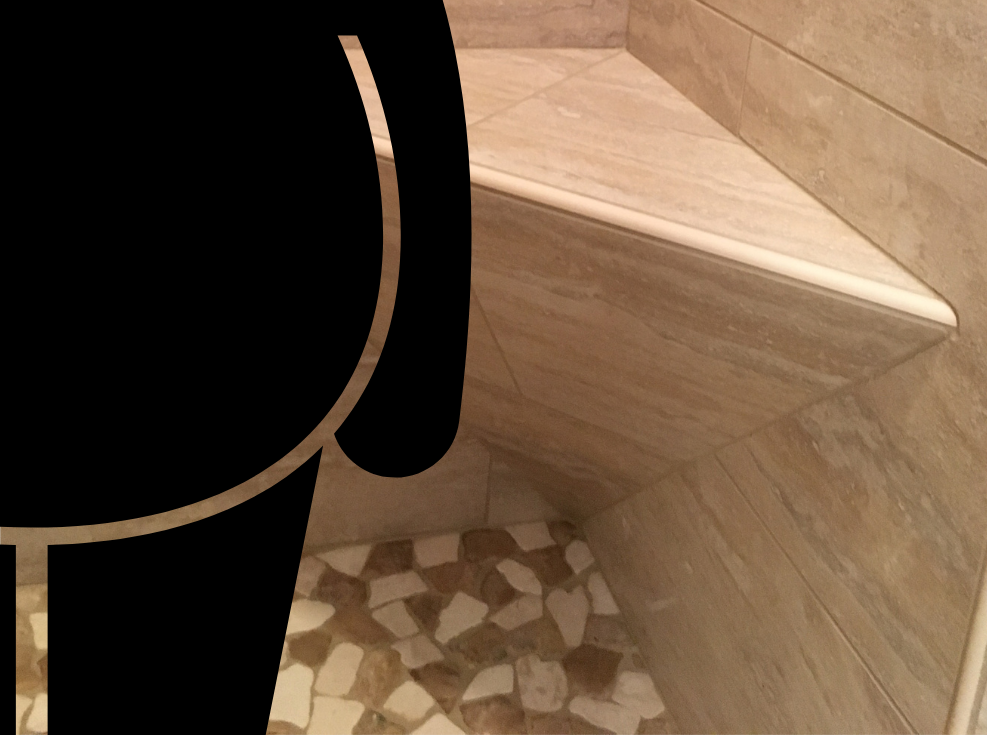
Picture of a tiled shower with a small seat in the corner with a digital person with a bigger body indicating their bottom won't fit on the seat easily.

Is it tall or short enough for people’s legs to rest on the floor comfortably?
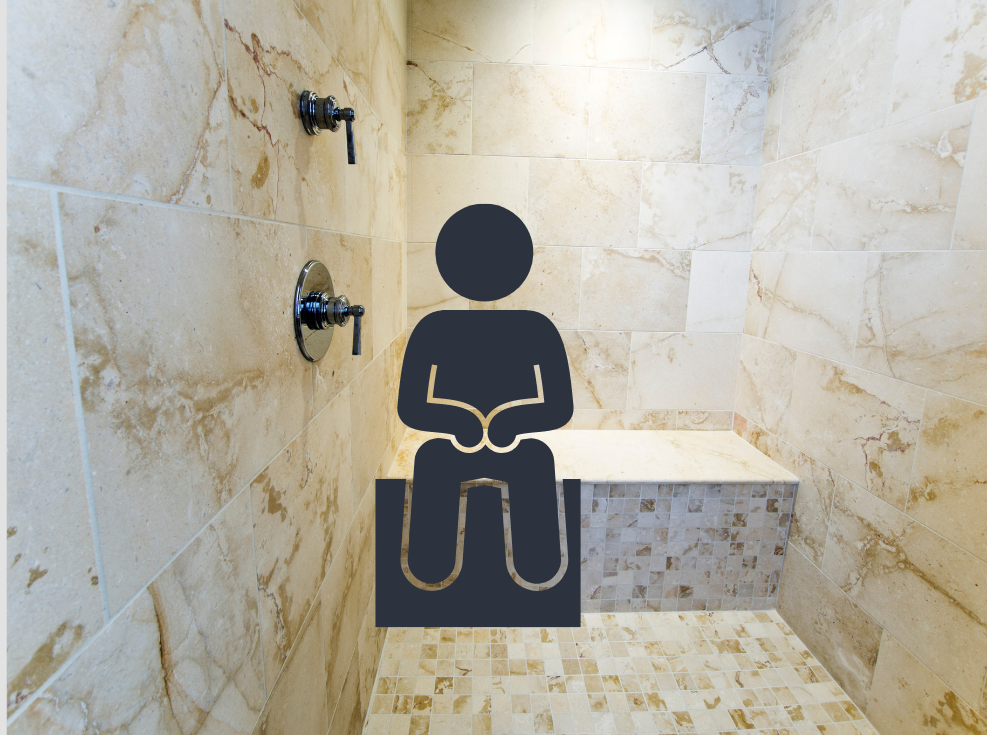
Image of a tiled built in seat in the back of a shower with a shorter person sitting on the seat. Their feet can't touch the floor because the seat is too tall.

Most of the material is slick and hard. When you’re in the shower, it’s wet and soapy, and I’ve heard many a story of people sliding right off those built-in seats – especially if they lack strength or sensation in parts of their trunk, lower body, or arms. I often recommend putting a towel on them to at least lessen the slick surface. I’ve heard of people sliding off recommended plastic shower seats, too!
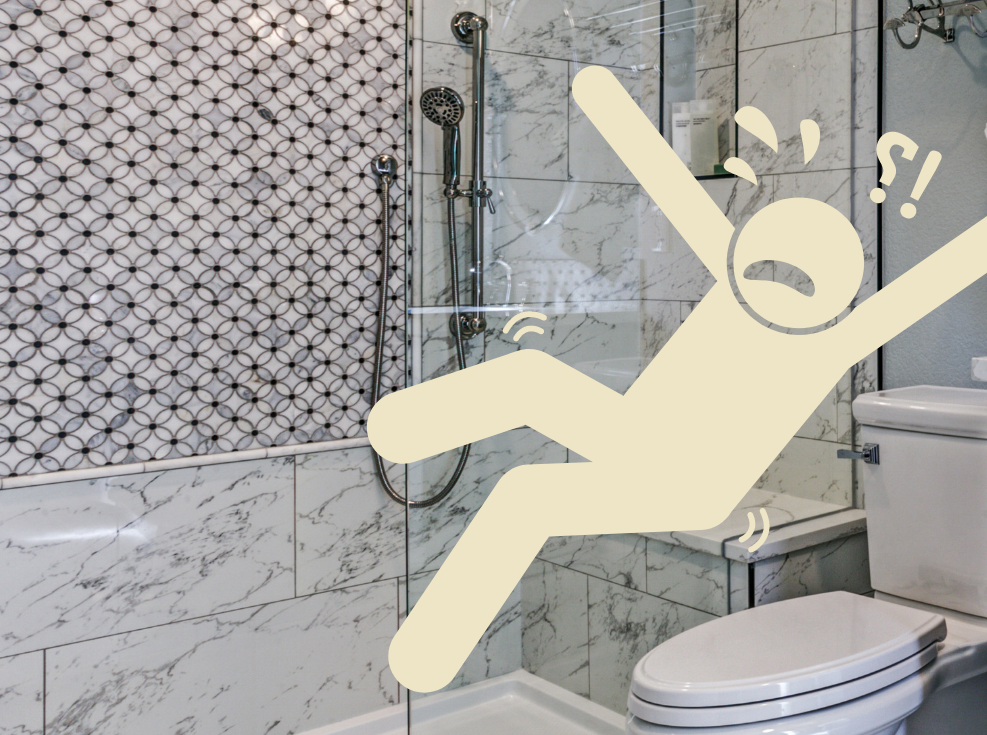
Picture of a tiled shower with a tiled seat behind a glass wall. A picture of a digital person sliding off the seat because it's too slick.

Hard seats are not great for bottoms with little padding, especially if seated in a shower for a while. This could cause unwanted pressure sores that cause even more problems!

Image of a digital person patting their bottom with pain marks coming from their bottom area after sitting on a hard slatted wooden seat in the shower.

These built-in seats are often placed in the far back of the shower – out of reach from the controls. If someone can’t stand up safely to reach the adjustable shower head or the water controls, the seat is basically a place to sit so someone else can help them reach everything. How does that promote independence?

Below is a screenshot from Google of my original search for “built-in shower seats.” Look how far away she is from the controls! And what happens if she drops that hose to wash her hair? It’s left hanging all the way at the front of the shower.

Image from my google search of a woman sitting on a seat in the back of a shower bathing with a bathing suit on. She is holding a handheld shower head and is at least two feet or more from the front of the shower.

If you have one of these built-in seats in your shower and realize it’s not safe for your needs and your occupational therapist has recommended something else, like this, for example… 
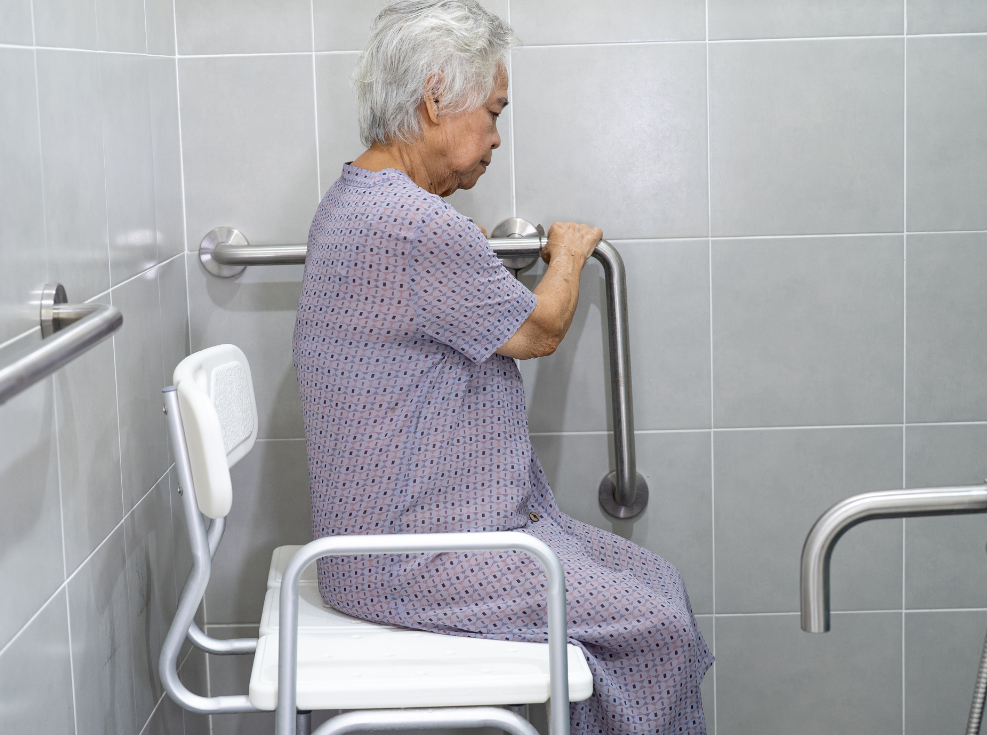
Picture of a woman sitting on a plastic medical bench holding onto grab bars.

… then the only place to put it is in front of the built-in seat, which, depending on the dimensions of the shower – might not give the person enough room to get their seat and their body into the shower. Invision putting an additional seat in front of the one this lady is sitting on.

Picture of a woman with short gray hair sitting on a seat in the back of a shower. She has on slippers and silk pajamas. She has one hand on a grab bar. There is a hand held shower head that's adjustable in the front of the shower.

And this one, pictured below… is an entirely different configuration with two seats, and you have to figure out how to put the other seat in there and get through the door, which automatically becomes smaller once you get the seat in there – AND if it’s s shower bench that has legs that sit on the outside of the shower – you can’t close the door causing water to be all over the floor.

Another soapbox of mine is the location of seats like the one pictured below. You have to be able to stand up and walk to get to the seat. It would be very difficult for someone who can’t use their legs to even slide over to that seat directly from their wheelchair.
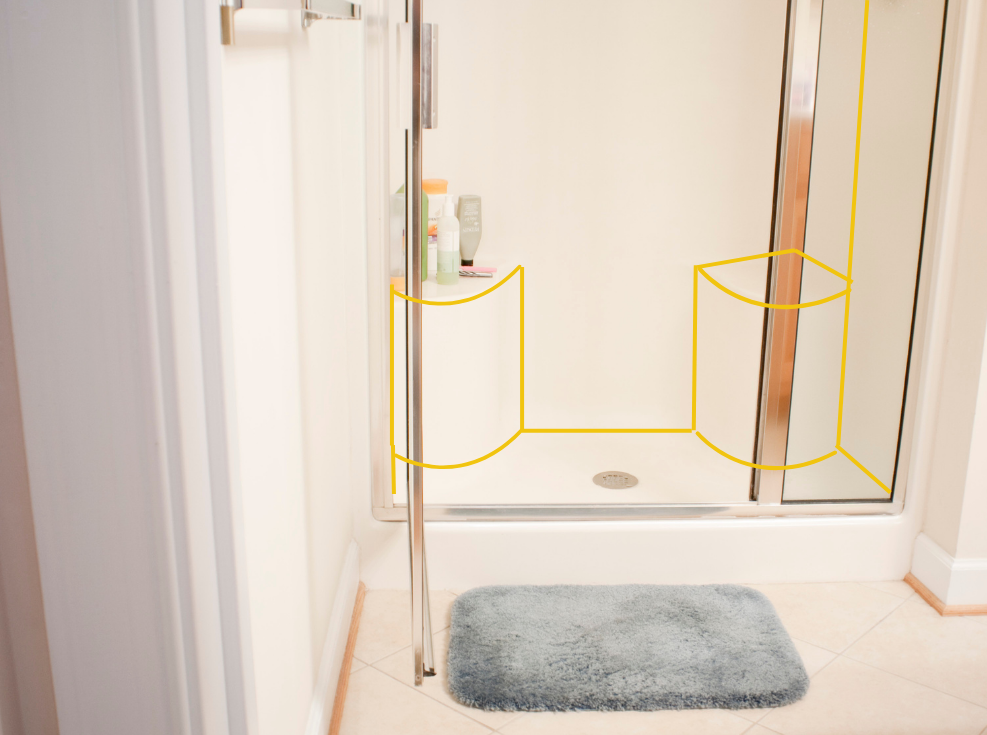
This is a shower with a door and it has one large step up into the shower and two small corner seats. You can see one seat is being used as a shelf for bathing supplies.

The same is true for this one. It is only usable if someone can step over that ledge, but if they have to slide over from a wheelchair without standing up, there are many barriers to get around the door and the walls. This bench has a nice little shelf for all the shampoo and other bathing supplies. I’ll give them that.
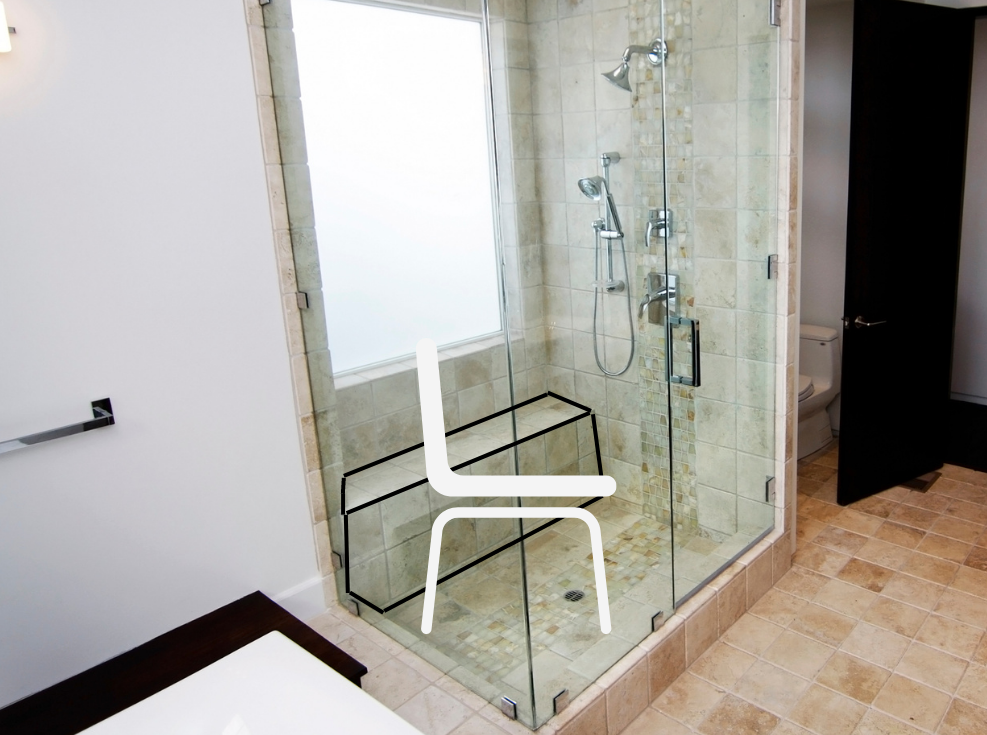
Image of a shower that has glass sides and a door. There is a seat in the back of the shower requiring someone to step into the shower. A digital image of a seat has been placed in front of the built in seat.

What’s my solution? When considering a shower remodel, don’t add a built-in seat.

Here’s my reasoning: Multiple people may use the same shower in your household. Why not make the shower flexible for them all? Additionally, if your needs change and you need a different type of seat (like a roll-in shower chair), the design allows for that. And if you sell the house down the road, they won’t have to tear out what you have in there.
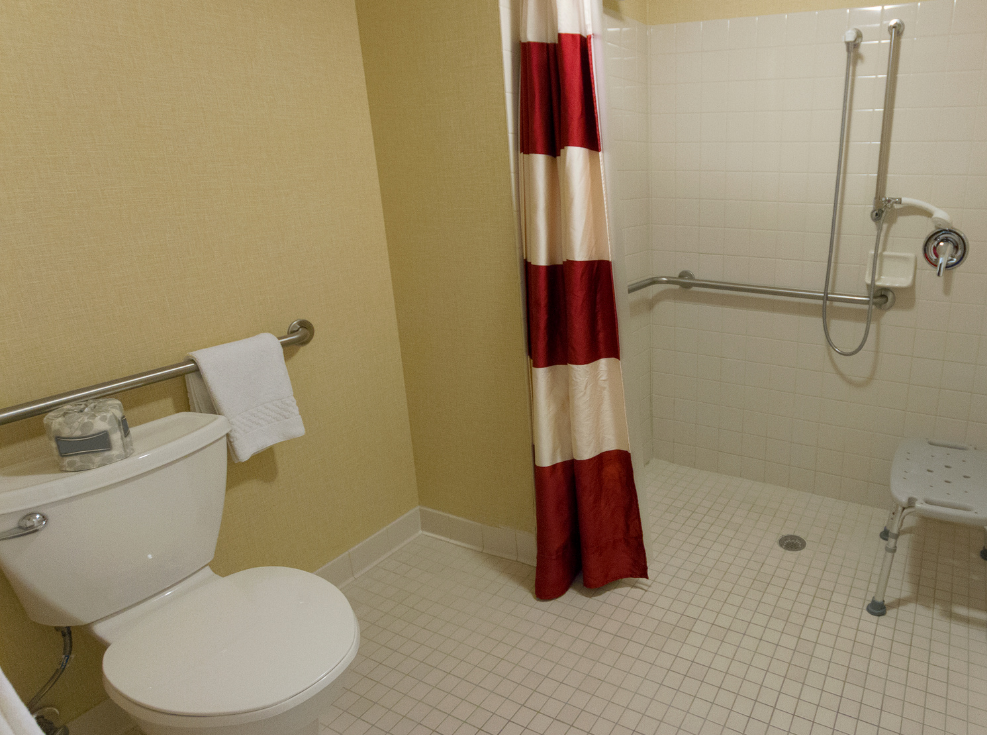
Image of a roll in shower without a ledge or lip. A curtain covers the opening. There's a portable seat within reach of the controls and shower head. There are also grab bars in the shower.

If you can start from scratch, there are many other details to consider, including the placement of many things (even the location of water controls close to the seat and drains).

Image of a 36"x60" shower with a fold down padded seat in the back within reach of the controls and the shower head. It's a roll in shower with no lip or step and a shower curtain on the rod.

You can also choose to put blocking around the shower walls during a build or remodel between the studs so a seat can be installed anywhere you want it in the future.
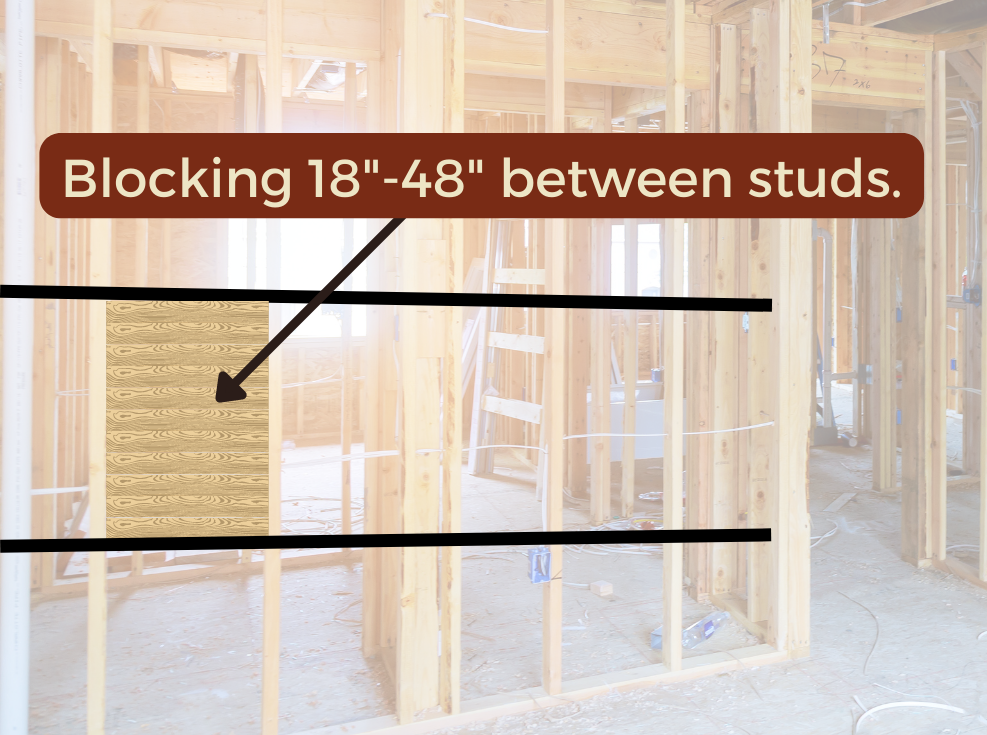
Image of studs showing that you can add blocking in between the studs between 18"-48" to accommodate grab bars wherever they are needed.

There are also fantastic folding seats that are padded and fold out of the way when not in use. 
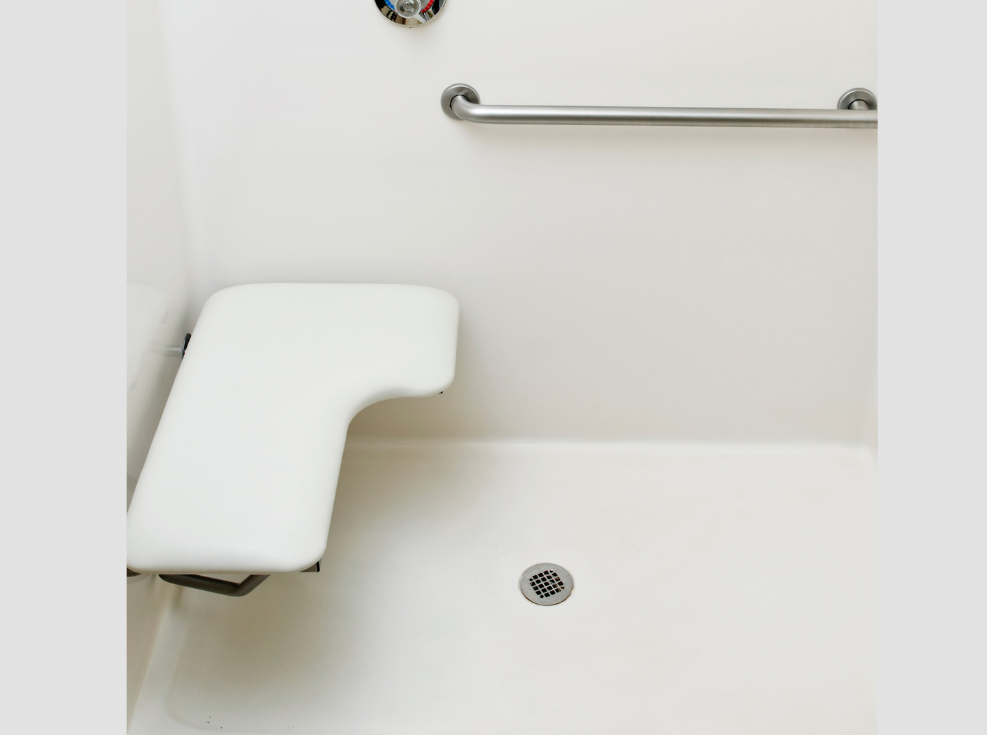
Image of a folding shower seat that's padded.

Any seat you decide to mount on the wall can be at the height of your preference and needs. If you don’t want to go that route and just want to place a different seat or bench in the shower, you have room to do that.

AND if your therapist has chosen a roll-in shower chair for you – that no-step entrance allows you to roll in, and because there’s no built-in seat – there’s extra floor space to spare to get in without hitting everything.
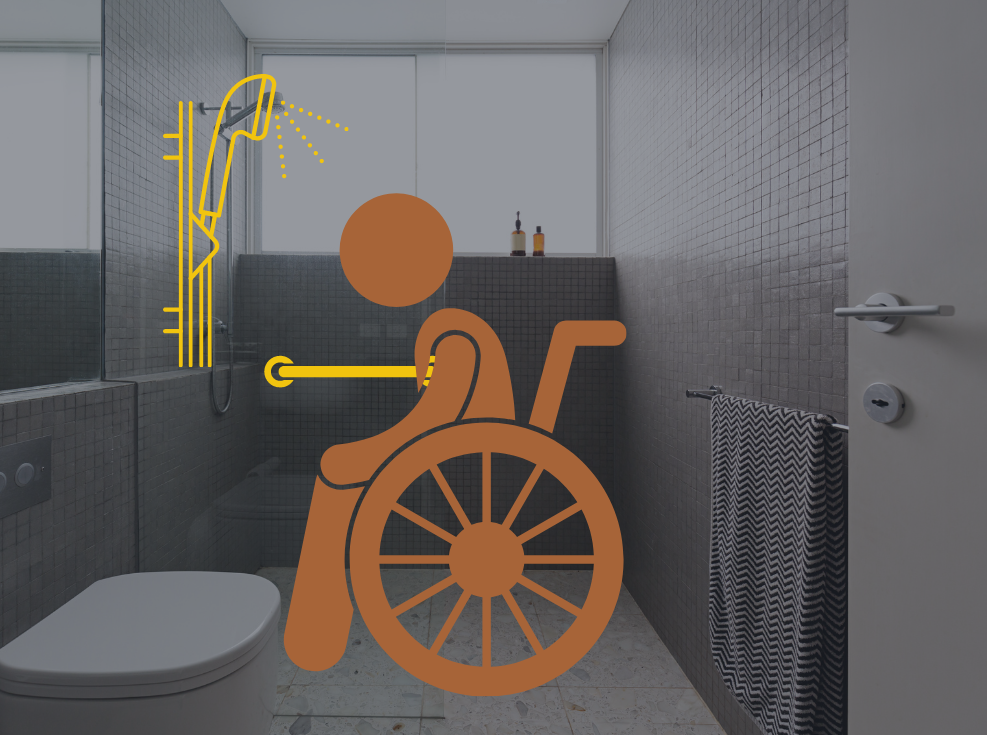
Image of an open shower with digital drawings on topi of the image that depict a person sitting in a roll in shower seat along with grab bars and and an adjustable handheld shower head.

The takeaway is that not all seats are one-size-fits-all and end up being a barrier when installed without considering how people will use them. Take the time to think about how all the people in your household will use the shower and if their needs will change. Ask an OT, don’t settle for something you think might work, and realize that the safety feature isn’t as functional as you thought.

This may also be a little controversial, but some people like a small shower, so there is less room to fall forward. I know, I know! We often think bigger is better – but not for everyone.

Accessibility and UD can be tricky, but it’s helpful to consider all the pieces of the puzzle to make the best decision for your family or your client that’s accessible and flexible.

11 responses to “Why I don’t recommend built-in shower seats”

  1. Rebekah stberg Avatar
    Rebekah stberg

    Hi Sarah,
    I want to commend you about your article. I would like to be able to make builders and contractors and planners aware that it’s better to install a flat bottom shower for safety . It is universally better to utilize a shower chair or install fold-down bench than to anticipate all ages and lifestyles to either sit in a shower or risk falling because of limited foot space being taken by pre molded seats. I see far too many new manufactured homes and flips using these molds and would like to see the industry become more aware of prefab seating and its limitations.

  2. Cathy Collyer OTR, LMT Avatar

    Hi! I am an occupational therapist and certified as an Aging-In-Place specialist.

    The built-in seats have their place. Often, it is for people with temporary needs or cardio-respiratory issues with no mobility concerns. They vary so widely in design and placement, along with their owner’s needs, that they are neither always a poor choice or always a great one.

    Hardly any disabled person has one issue or goes from fully independent to disabled. It is rare for any home modification to be safe when the degree of disability is high OR the level of cognition is low. Often these arrive together and necessitate physical assistance.

    The previous commenter doesn’t understand building principles; it is often impossible to construct an affordable accessible shower without a lip in some homes. Many reasons, including price and space.

    1. Sarah Pruett Avatar

      Hi Cathy!

      You’re right the variation is definitely vast and someone needing something temporary is very common. Shower set-ups are definitely tricky and often don’t work for everyone based on transfers or if someone can stand and sit for the shower. I think this is one of the most difficult places in the home to work for everyone, so I think that flexibility in the design is needed.

      You also bring up a great point about the need for assistance for physical and cognitive needs. Many will not have the option to do the entire task independently – maybe parts of it, which do reduce caregiver load when possible.

      Thanks for your comments!

      I do think a zero-threshold shower is much easier if you have the option to prepare it during the initial design stages, but you are right, there are lots of factors that make that impossible or financially out of reach when doing renovations to an existing space.

  3. Mike Avatar
    Mike

    To be honest I think this is a BS article, So many people are writing articles about dont do this to your house, it may not fit what someone else wants in the house when you sell it or some other BS. If you want something in your house, then put it in. You are the one living there. Houses can be changed on the inside, or the outside, when you go look at house do you like the layout of the house, do you like the size, do you like where it is at, do you like the property it sits on, everything else can be changed.
    I have know people not to be houses because they didnt like the color or the floors, all are really bad reasons.
    So if you want a seat in your shower put one in and enjoy, and they are many safety features now that can help, but falls do happen no matter the age or the safety things we put in unless you want to wrap up in bubble wrap .

    1. Scott Pruett Avatar

      The point is to give people the flexibility to use what they need and not create limitations because of a seat that can’t be moved without major work and expense.

      We’re not saying to avoid seats altogether.

    2. Issac Avatar
      Issac

      Calm your tits, Mike. Yes, everything can be changed, but that does not mean every change is free or convenient. A shower chair gives flexibility to everyone using or sharing the shower. I usually consider what my family would like in my house — yes, for all showers.
      But ofc, if you have no one to love, then sure, do whatever YOU, and only YOU, like.

    3. Sarah Pruett Avatar

      Accessibility and UD can be tricky, but it’s helpful to consider all the pieces of the puzzle to make the best decision for your family that’s accessible.

      The point of the article was to make it easier for people to make those changes without having to do a lot of renovation – and most homes these days require renovation. Because everyone does things differently, making the space flexible is important.

  4. darren Avatar
    darren

    I take my shower out of the bath tub I sit on the toilet and do my washing on me but my dad said its not safe its that true

    1. Sarah Pruett Avatar

      Hi Darren!

      Since I’m not there to see your entire bathroom set up or know a lot about your situation, I can’t really give you advice. There are a lot of safe ways to use the shower, but you need to have it set up well for your needs. Maybe you and your dad could check out our free courses in our learning community to get some ideas to see what might work well for you: https://universaldesign.org/learn

      Signing up is free! I suggest looking into the bathroom sections in Courses 3 and 4.

  5. Meredyth Sawyer Avatar
    Meredyth Sawyer

    I don’t want a seat that is fold up/down or floating. Mould can grow anywhere in a shower and it would be a pain to clean in between slats on the seat, hinges and wall attachments. As far as sliding off the seat, I’d put down or cut to size, a non skid mat rather that unnecessarily wetting another towel. Cleaning is a priority for me. I would be so happy with a built-in seat that goes down to the floor and is tiled the same as the shower. Of course you need sealer where it touches the floor and wall and don’t forget to maintain it.

    1. Sarah Pruett Avatar

      Hi Meredith!

      That makes sense about the cleaning. I have seen others use a small honeycomb cushion that can easily be put into the washer as well to reduce slipping off of surfaces. It does depend on someone’s specific needs and preferences for sure. If it works well for you to put in a tiled seat in the shower, that’s great! Accessibility and UD can be tricky, but it’s helpful to consider all the pieces of the puzzle to make the best decision for your family that’s accessible.

      The point of the article was to note that making the space flexible for people at the onset makes it easier for them to add in the things that work best for them. Since everyone does things differently and uses equipment in different ways for safety, having an open space to allow for that flexibility was what I was discussing.

      Thanks for your input and points about cleaning!

Leave a Reply

Your email address will not be published. Required fields are marked *